2022-2024
Agreements: the first court of a jurisdiction with no land
Product & Design Lead
Problem
How do you give people and organizations inside an internet-native jurisdiction a way to do business together with trust?
Outcome
An open-source, public design system any citizen of the jurisdiction could build on, proven first with Agreements: collateralized commitments with clear creation, funding, dispute, and resolution states.
Context
Nation3DAO was a research project about the long-term possibility of an internet-native jurisdiction: a global culture and economy that is not defined by a single physical territory. Its work looked at network states, micronations, constitutional systems, and Special Economic Zones: the practical route through which a new jurisdiction could eventually operate inside an existing state.
That horizon mattered, but it could not be the product backlog. The immediate question was much more concrete: what is the smallest institution-like service that people could use now, globally, without waiting for a future state to exist?
Turn the thesis into a first product
The first module was Agreements: a way for two or more parties to make a collateralized agreement. Each party committed assets up front, agreed the conditions and dispute path, and held an on-chain record that neither a platform nor either party could unilaterally rewrite.
The intended consequence was economic, not legal enforcement. Collateral set the limit of exposure before anyone entered the agreement, and a group of jurors selected through the DAO could examine a dispute and resolve it under the rules the parties had already accepted. That boundary mattered as much as the mechanism: it let the product make a real, understandable promise without pretending it could replace a court.
The near-term use case was global arbitration where traditional legal routes are too slow, expensive, or geographically fragmented: cross-border transactions, digital assets, and internet-native business arrangements.
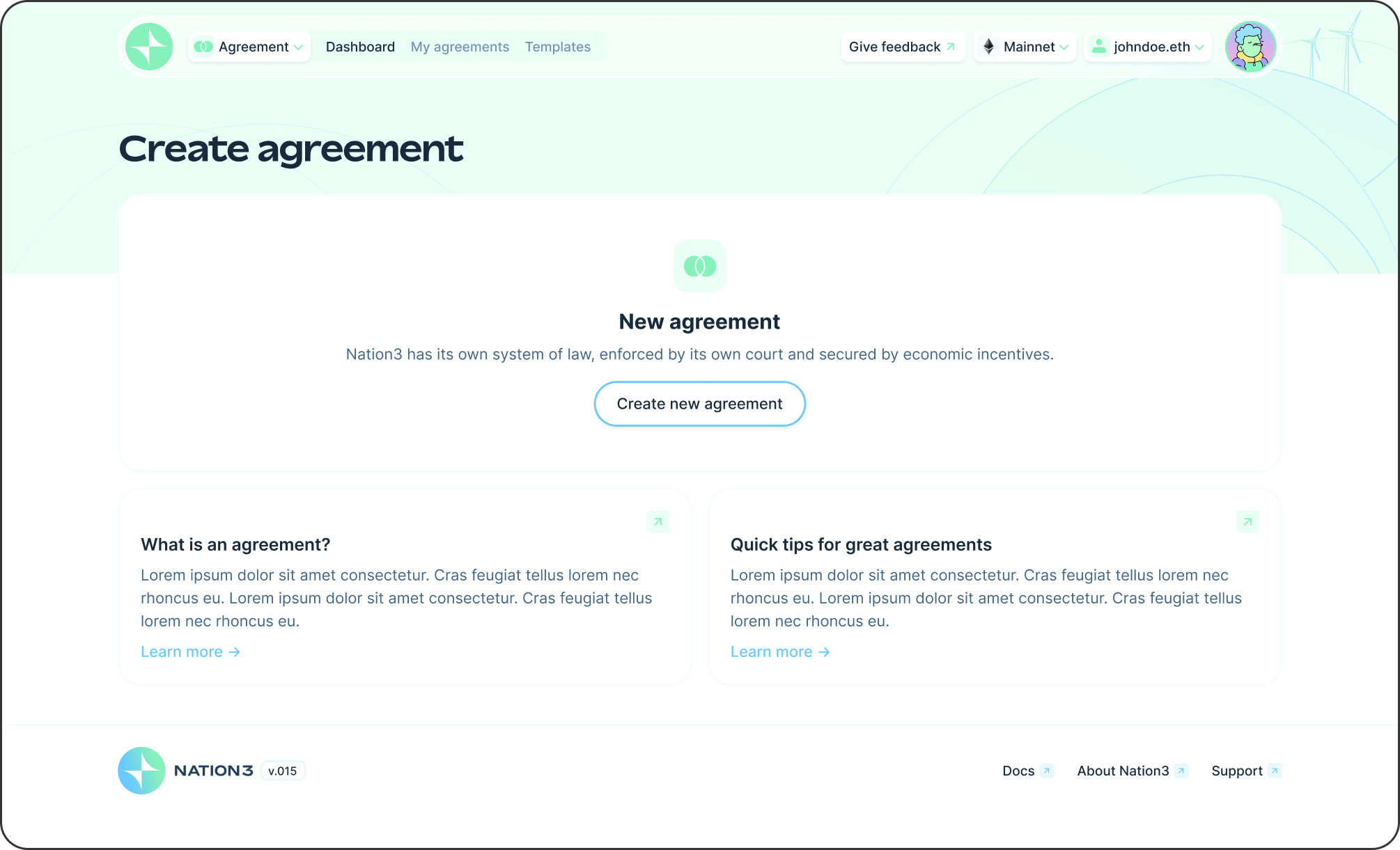
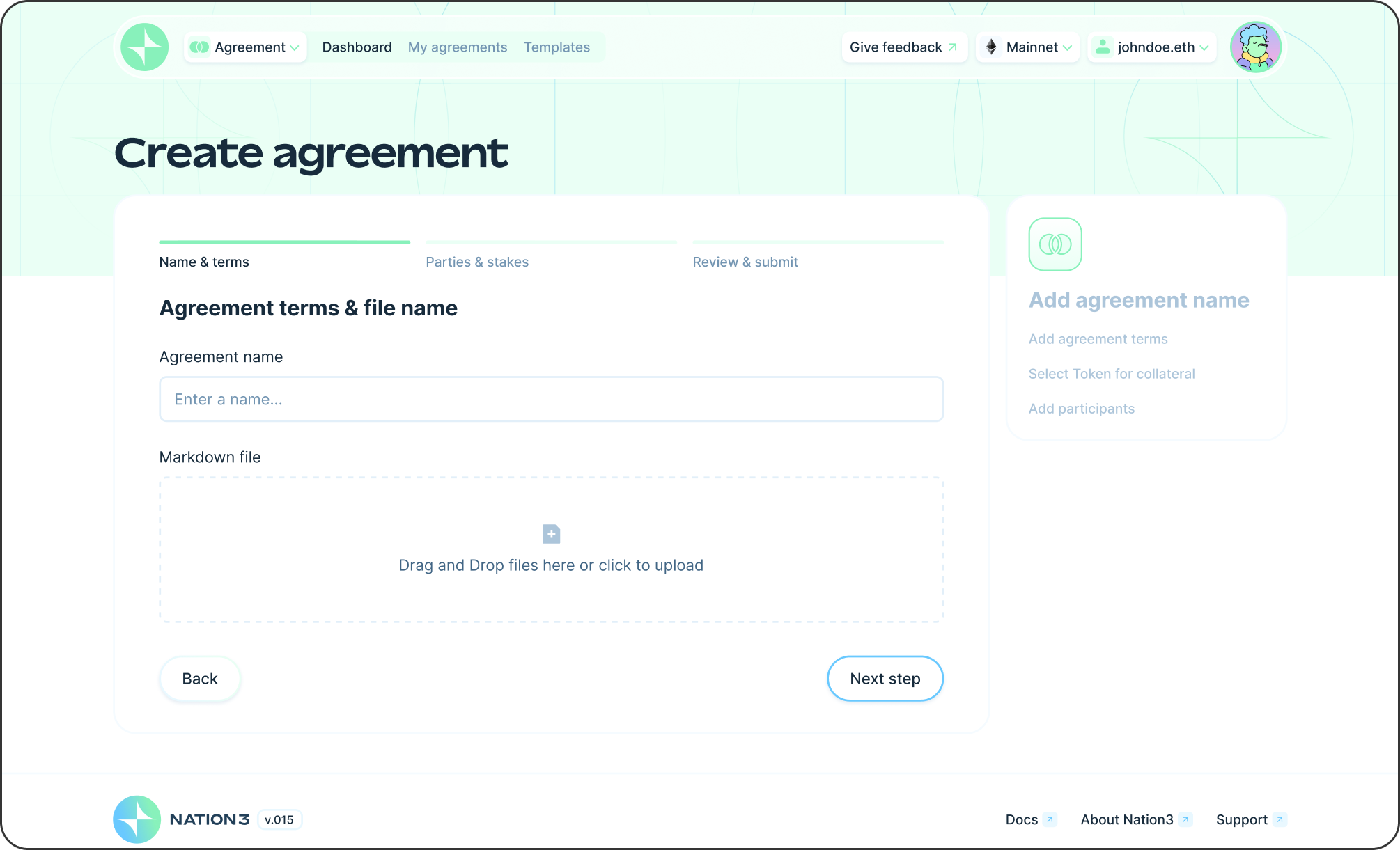
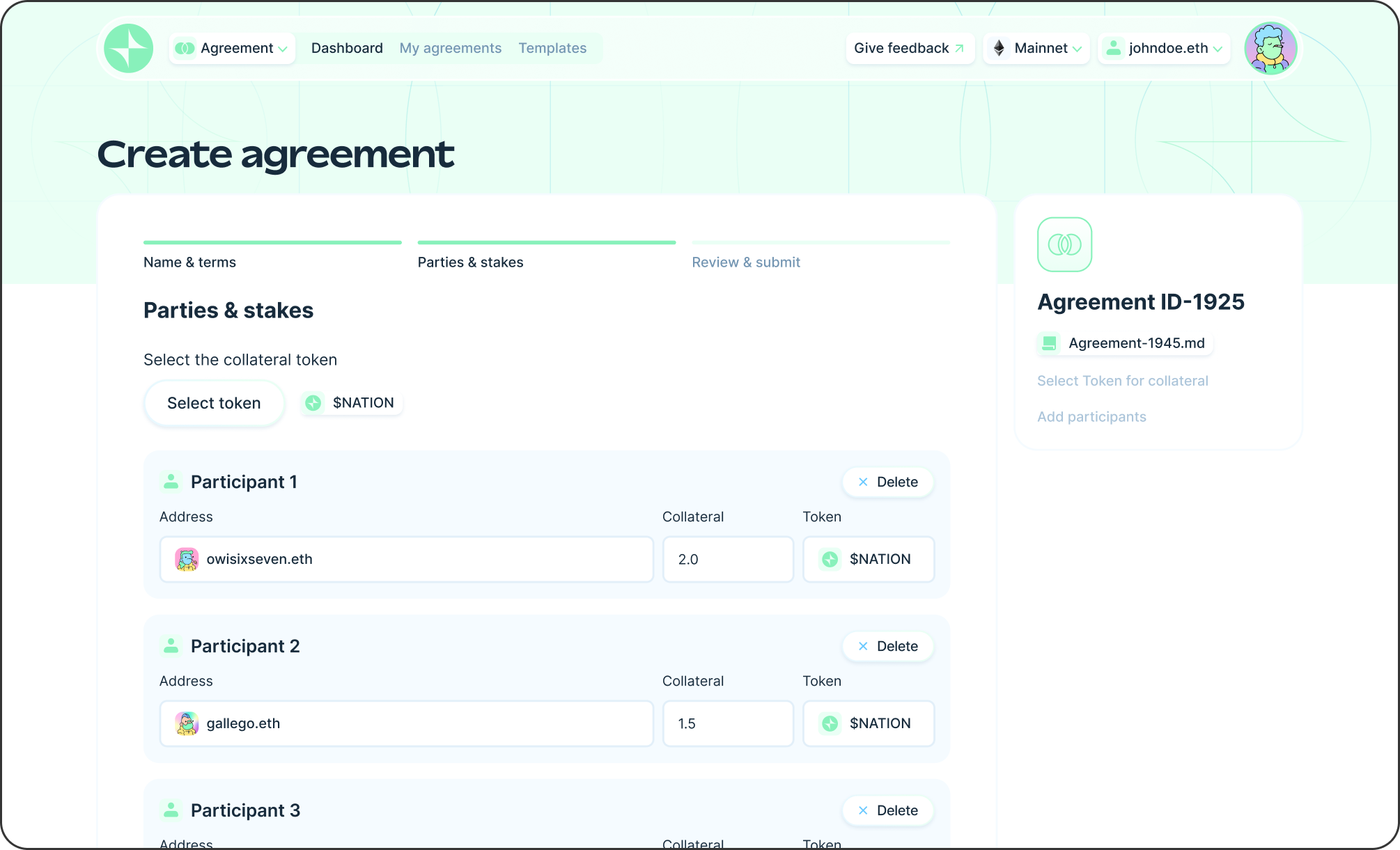
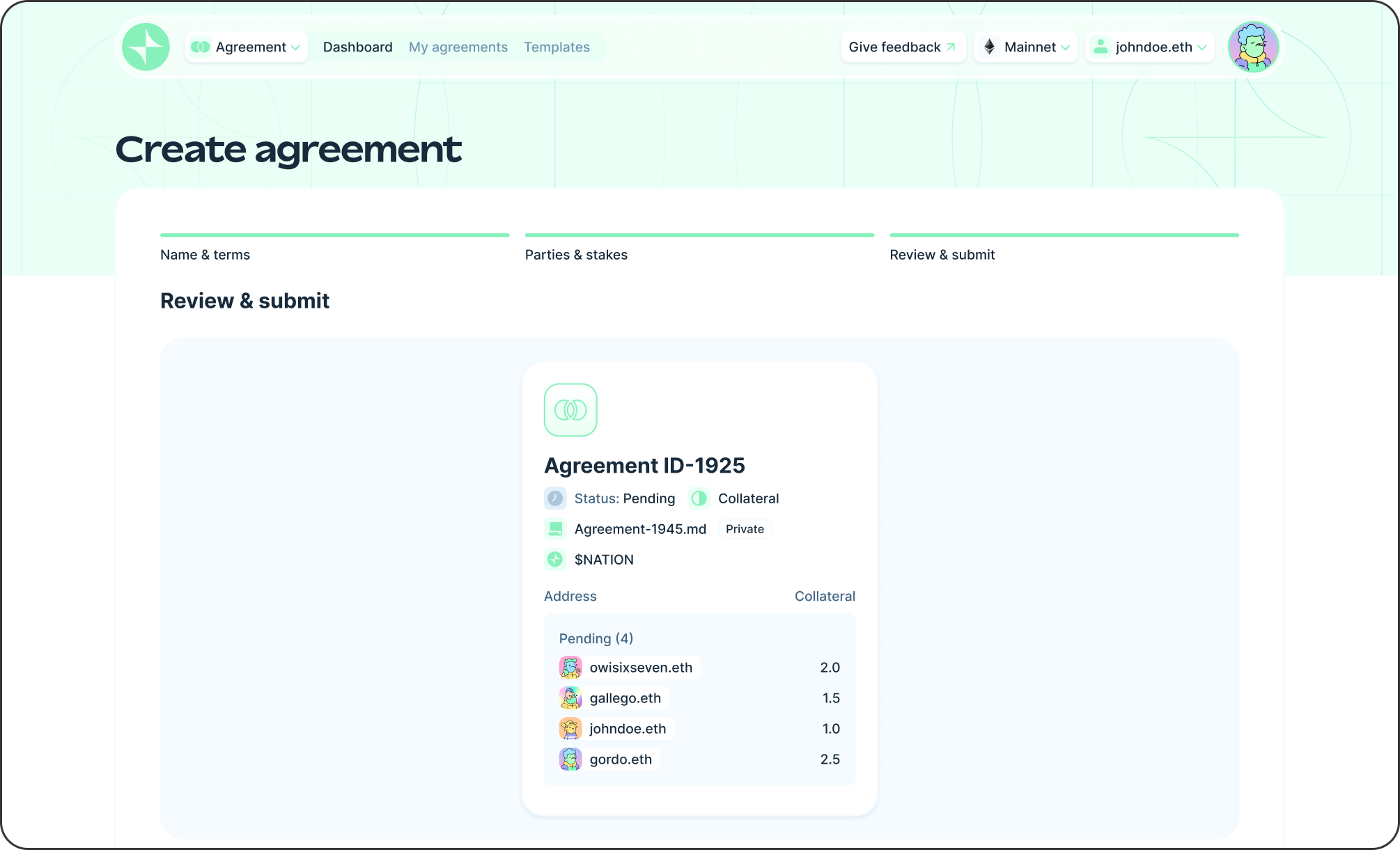
Build a public product language
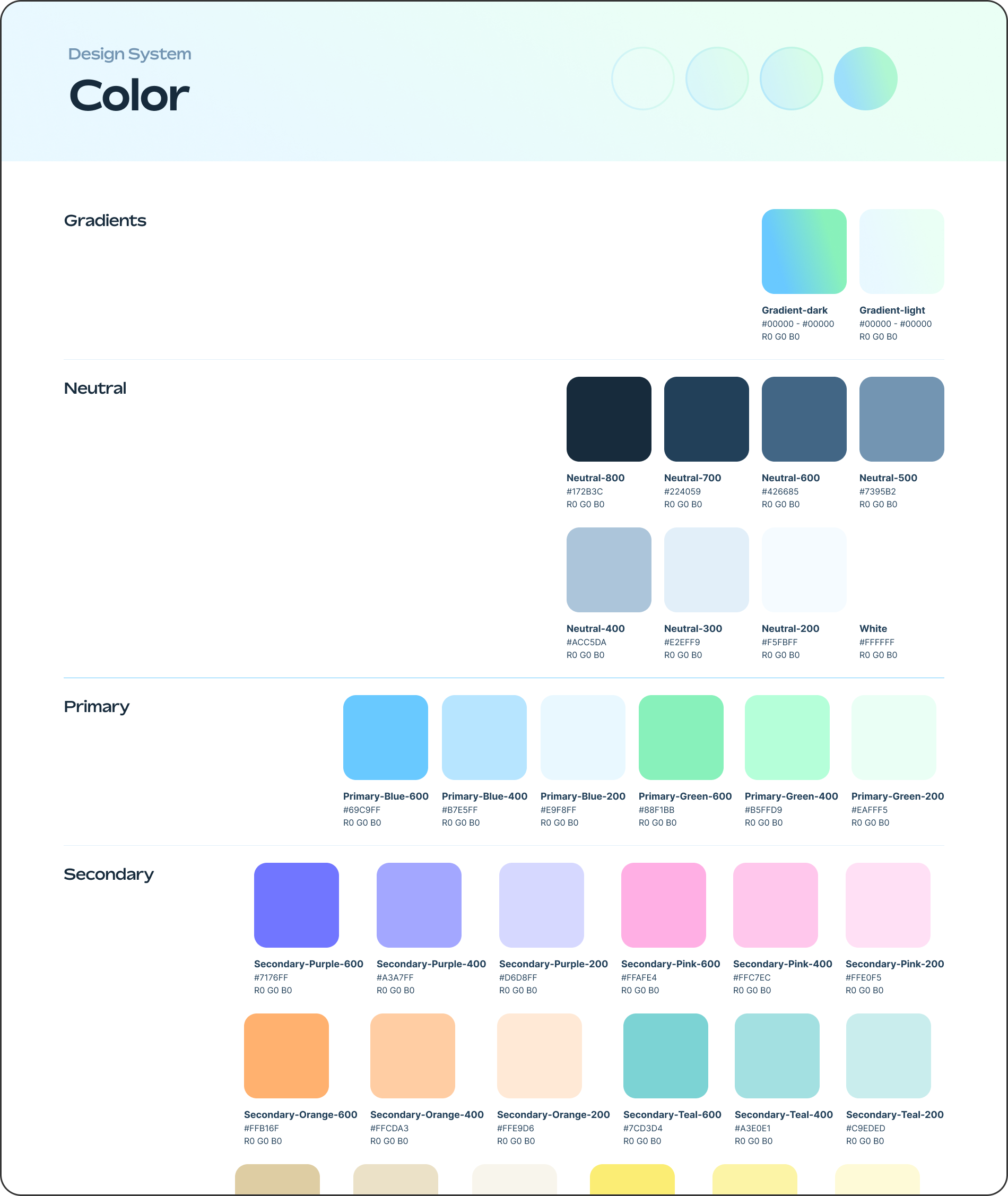
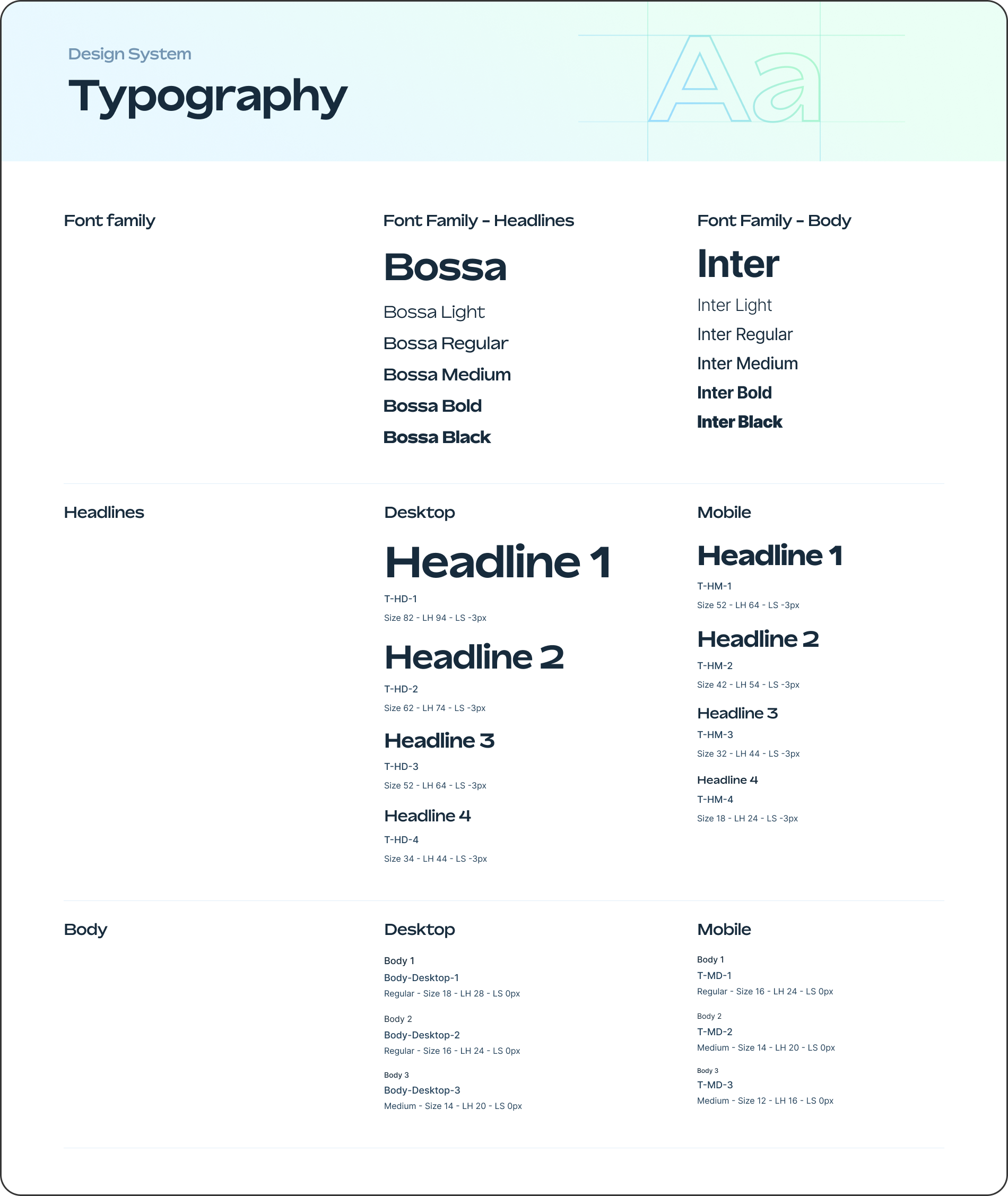
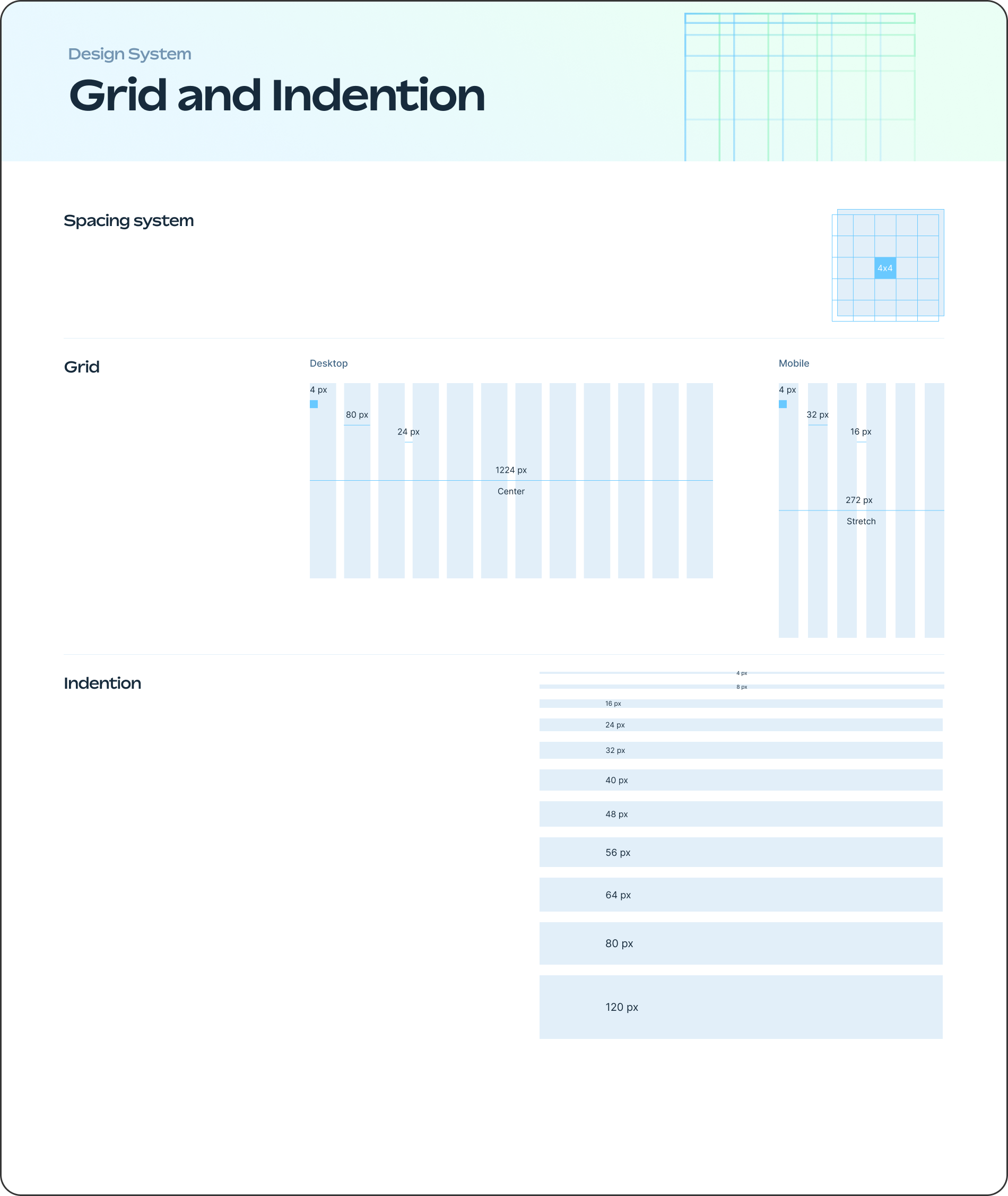
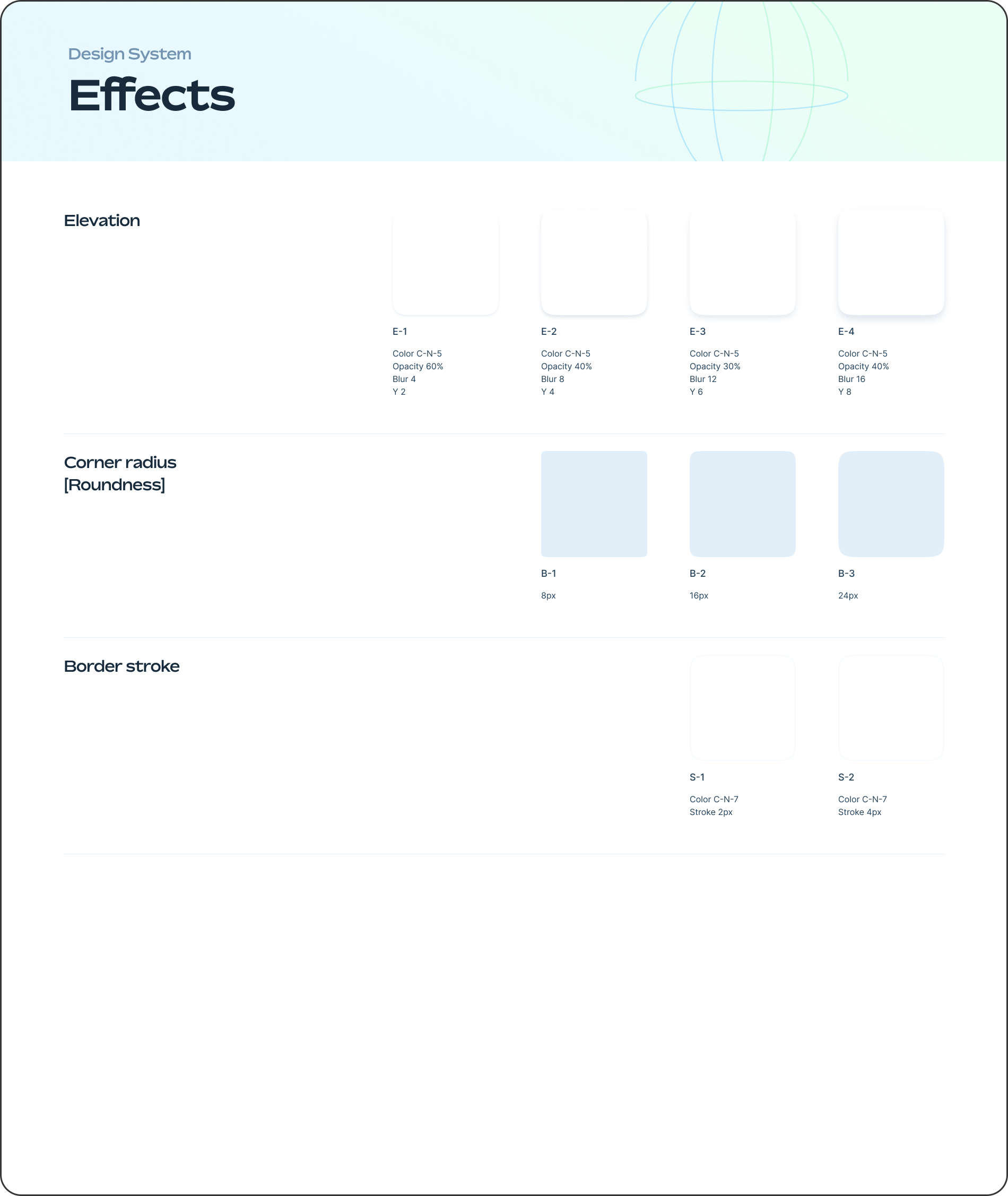
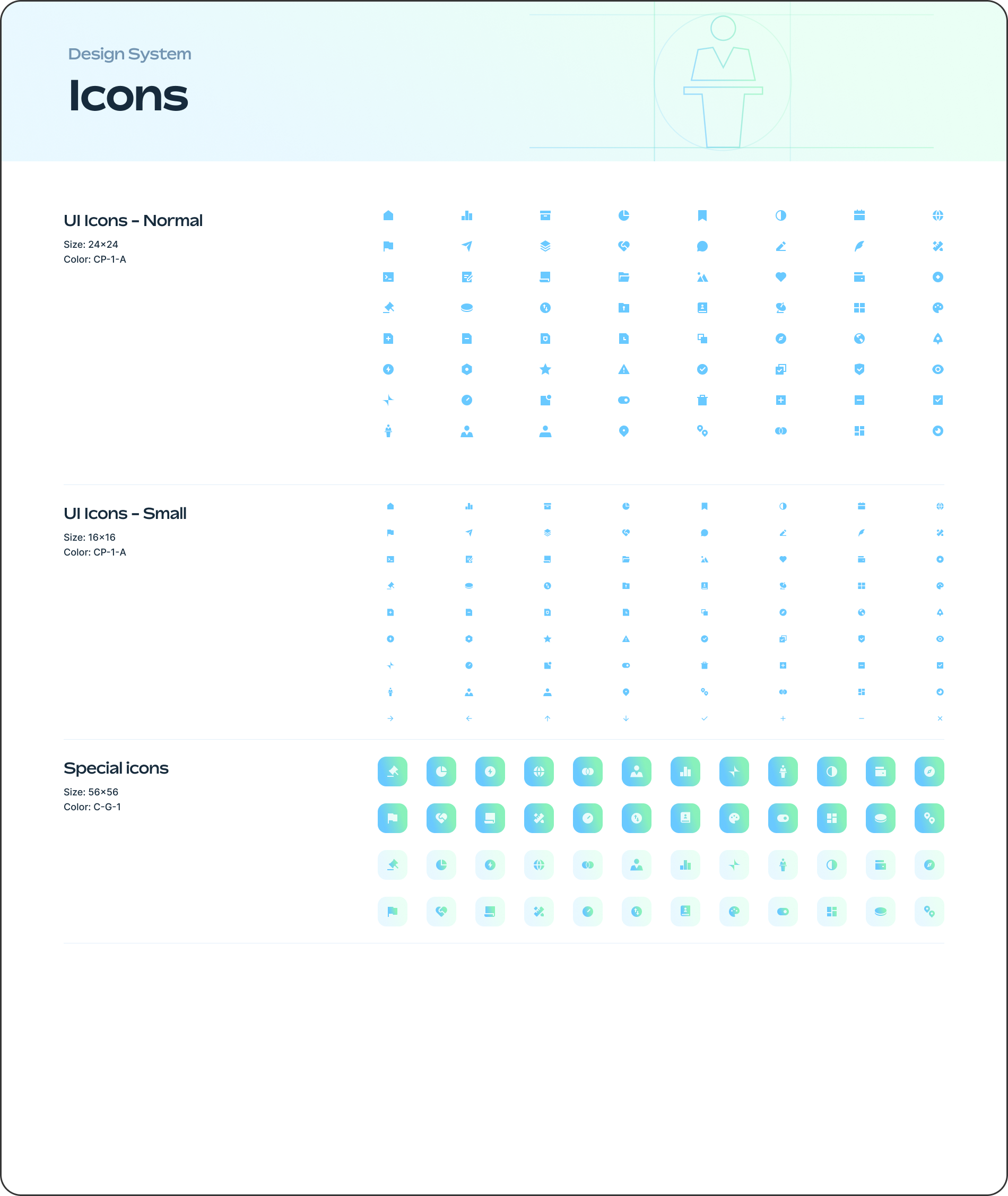
The product needed to feel like part of a coherent future institution, not a disconnected crypto application. The team created a distinctive identity, language, and public design system so other builders could make products belonging to the same world.
As Product & Design Lead, I translated that institutional direction into usable product rules and led the application of the design system to the first live surface, then released it openly, so any citizen of the jurisdiction could build the next product on the same foundations. The system was not only visual consistency; it made roles, states, actions, and consequences legible across an ecosystem intended to grow beyond one product.
Read the same rules on every screen
The design system was not proof of visual polish on its own. It had to prove that a party could open an agreement on a laptop or on a phone and read the same terms, the same state, and the same next action. Rather than shrink the desktop layout, the team designed a dedicated mobile experience for Agreements, with all the translation work that a dense, multi-actor interface demands at a much smaller size.
Make an agreement understandable before it is needed
Agreements brought together an unusually dense set of concepts: wallet-held assets, multiple parties, collateral, commitments, deadlines, evidence, jurors, and protocol state. The design task was not to hide those commitments. It was to make their meaning and consequence clear before a dispute existed.
I mapped the people behind the interface before drawing a screen: the party proposing terms, the counterparty evaluating the same commitment, the jurors who would receive a dispute record if one existed, and the DAO layer that defined or selected the rules those jurors would apply. Each needed a different reading of the same underlying state.
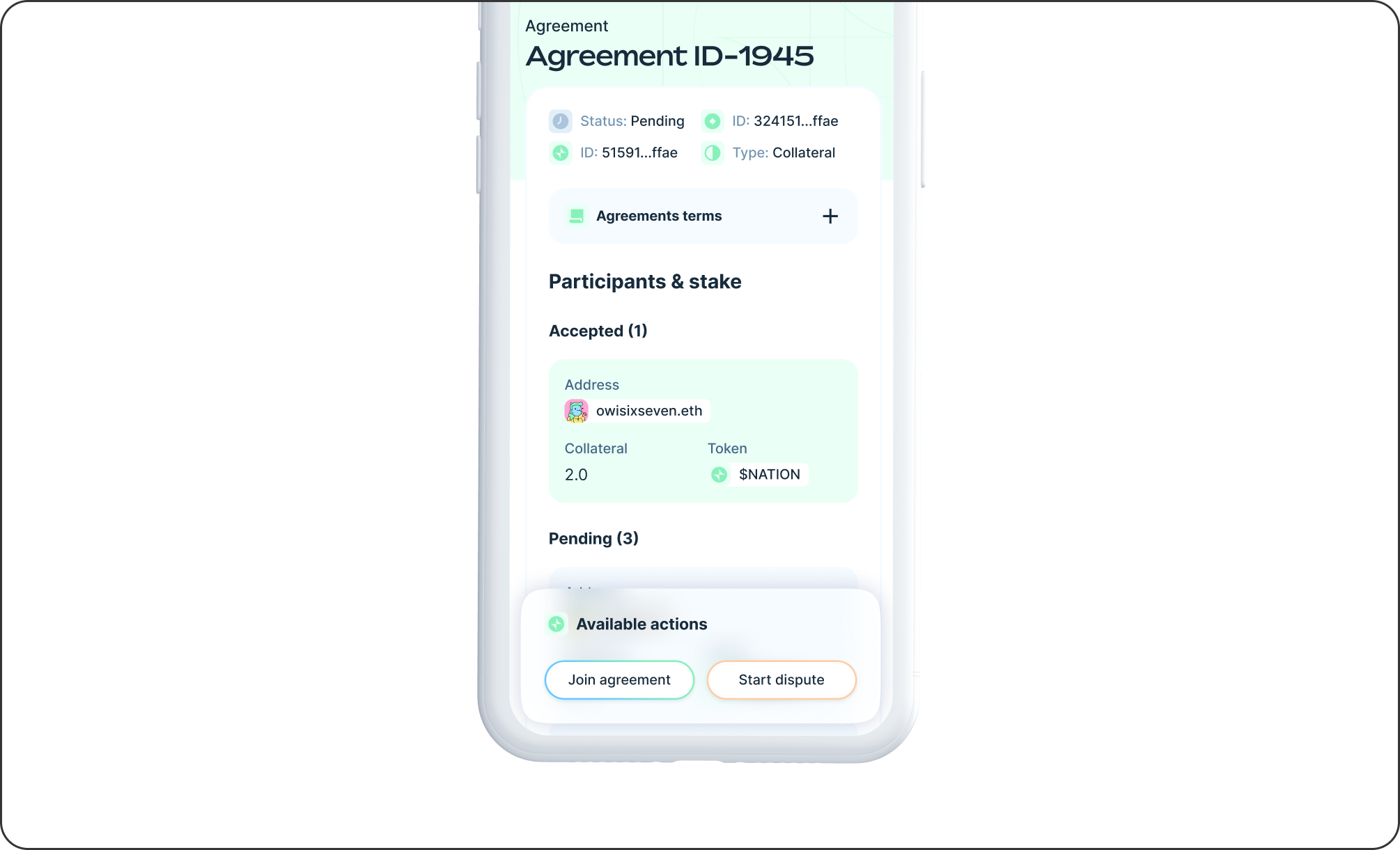
From there, the interface had to show the current state, the action available to each party, and what would happen if either party did nothing. That is why "Join agreement" and "Start dispute" sit side by side as the two live actions on an active agreement: accepting the commitment and contesting it are the same kind of decision, not an ordinary action next to an exceptional one. Disputes were not an exceptional screen added at the end; they shaped the whole model. Partial funding, missed deadlines, missing responses, evidence, and resolution were all product behaviour, worked through with engineering, research, and legal contributors before implementation, so the interface reflected the actual rule system rather than a simplified story about it.
Outcome
The result was two things at once: an open, public design system any citizen of the jurisdiction could build on, and the first proof it could carry a real product, Agreements, a live collateralized agreement and arbitration protocol spanning creation, funding, dispute handling, and resolution.
For me, the work proved a useful product principle, and one I keep applying since: a large speculative vision only becomes credible when it can be reduced to a precise action that someone can take today, understand fully, and trust with real consequences. Leading that reduction, across engineering, research, and legal contributors who each held a piece of the real constraint, is the same discipline behind every case in this portfolio.